



PFT III Evaluation
These comments provided by Neurotechnology are based on NIST PFT III results, reviewed on April 15, 2026.
Neurotechnology's recent NIST PFT III results show two leading strengths: Neurotechnology+0017 is the most accurate fingerprint recognition algorithm, while Neurotechnology+0018 is the fastest, using smaller templates and providing an accuracy level comparable to top-tier contenders. This continues Neurotechnology's long-standing participation in NIST PFT evaluations, where ongoing algorithm refinement has validated its position as the top vendor.
What is PFT III?
The Proprietary Fingerprint Template (PFT) is a series of fingerprint matching technology evaluations, which are run by NIST to assess one-to-one matching performance and accuracy with proprietary templates while using unified datasets and rulesets.
The most recent PFT III is designed in a way that the testing is performed by each participant with NIST-provided biometric data, using NIST-provided testing environment and protocol.
The results are then submitted to NIST for further evaluation.
See PFT III official page for more information.
Recent Results
Our most recent submissions are:
- Neurotechnology+0017, submitted on July 29, 2025. Achieved the highest accuracy in the tests. The position remained unchanged during the most recent review.
- Neurotechnology+0018, submitted on February 2, 2026. Achieved the highest speed in the tests, with accuracy level comparable to top-tier contender, and smaller templates, compared to our previous submission.
These datasets were used for experiments:
-
Law enforcement datasets:
- Arizona Department of Public Safety (AZDPS) – plain and rolled impressions of all ten fingers.
- Los Angeles County Sheriff's Department (LASD) – plain and rolled impressions of all ten fingers, captured with a mixture of ink and optical devices.
-
Border control datasets:
- Port of Entry/BioVisa Application (POE+BVA) – plain impressions of index fingers.
- US VISIT #2 (VISIT2) – plain impressions of index fingers, which are similar to POE+BVA.
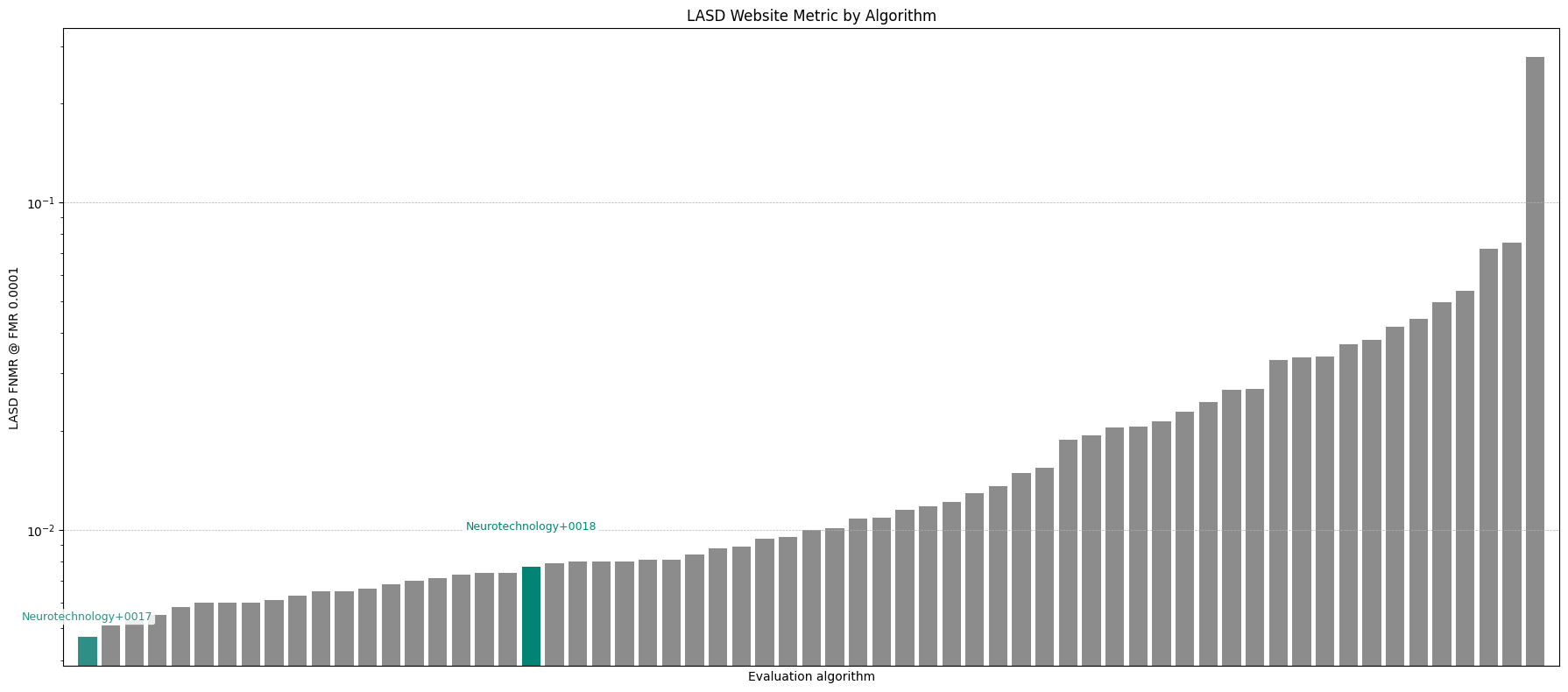
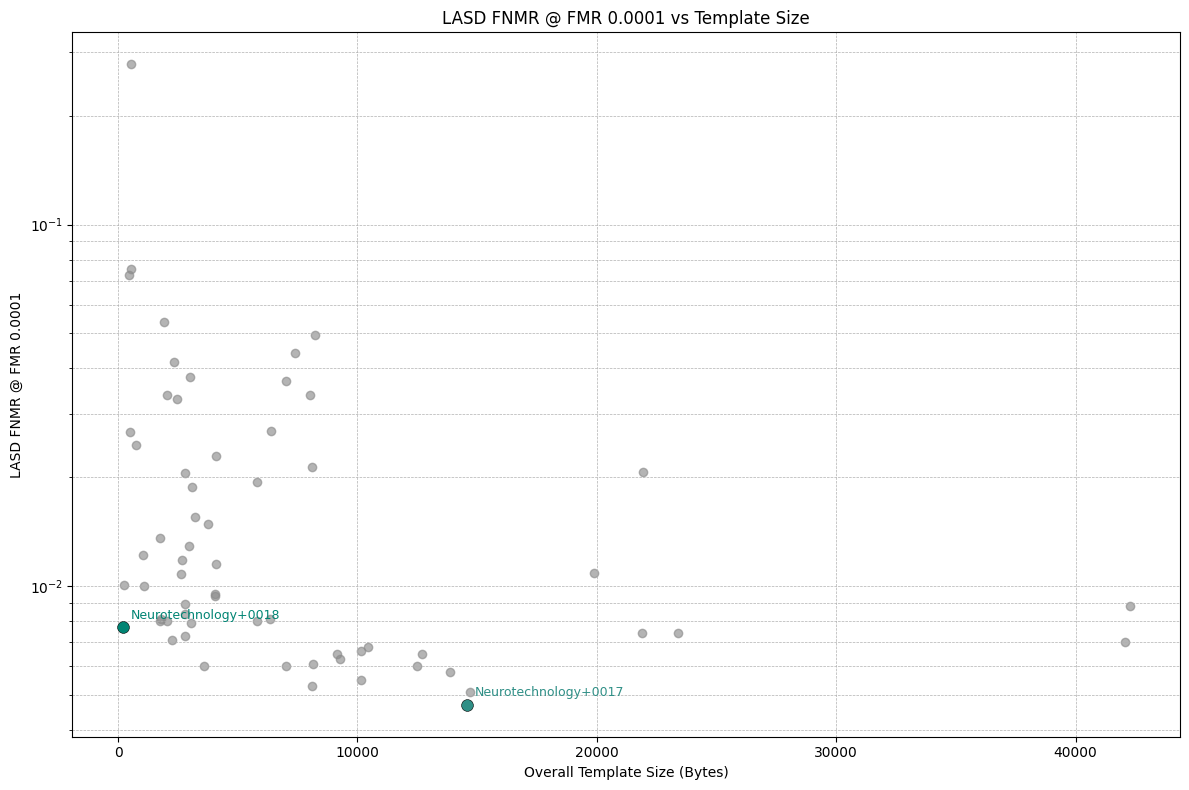
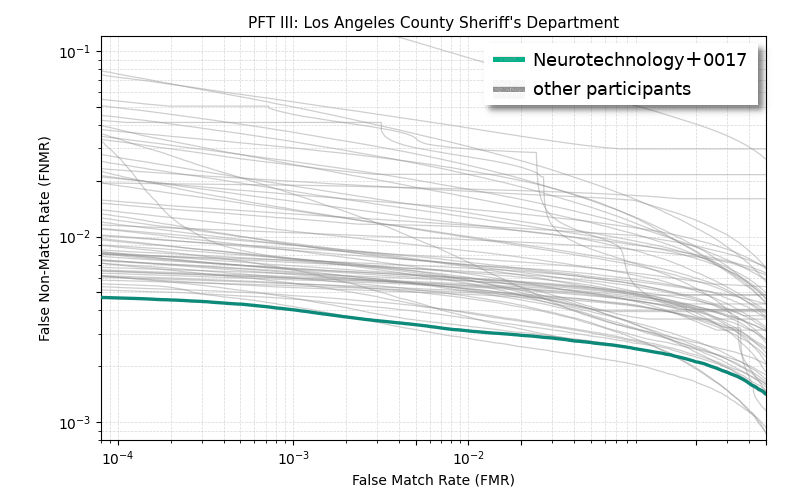
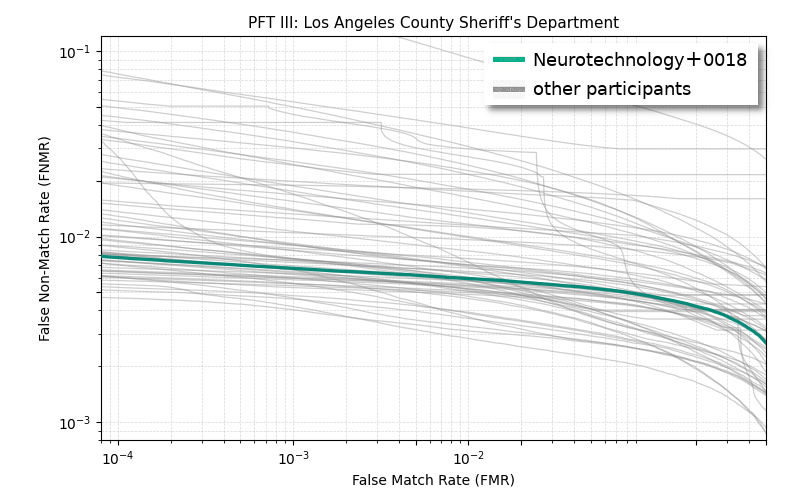
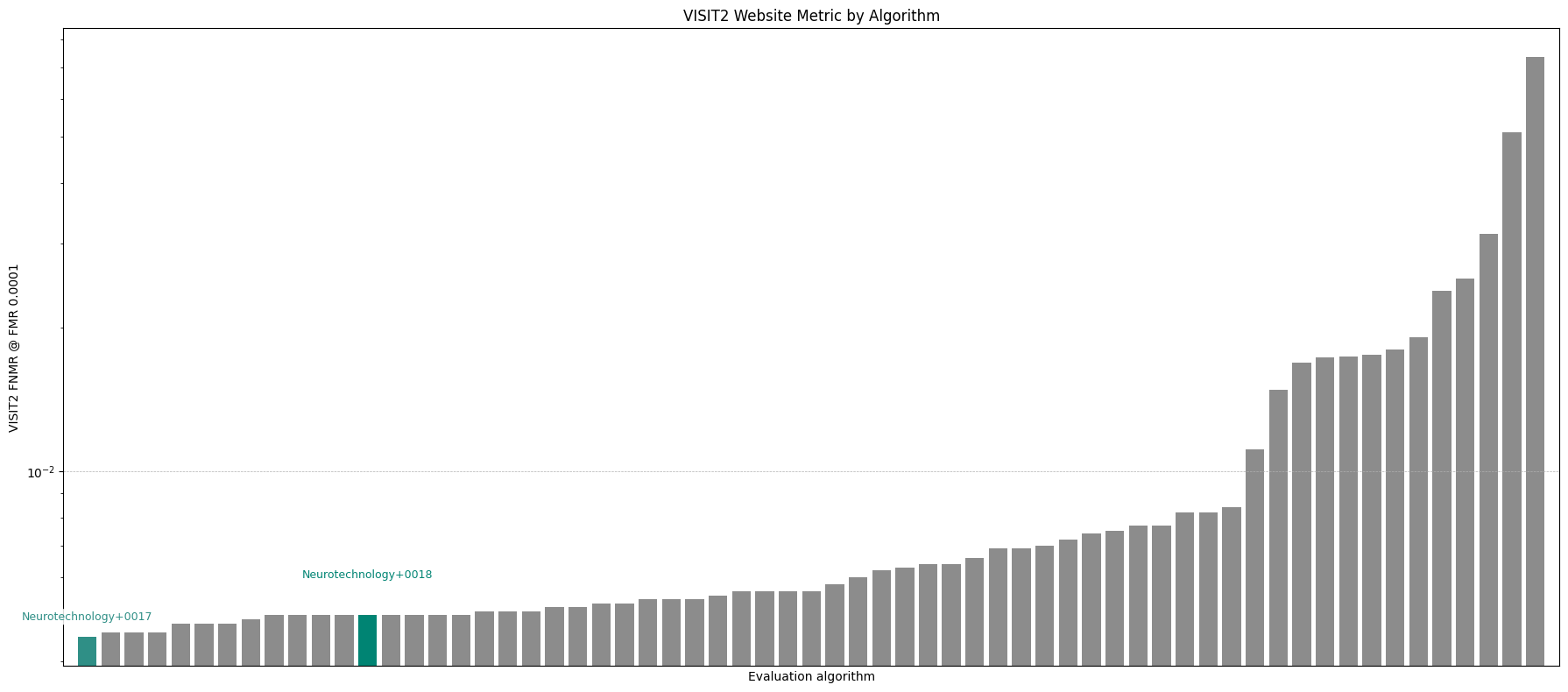
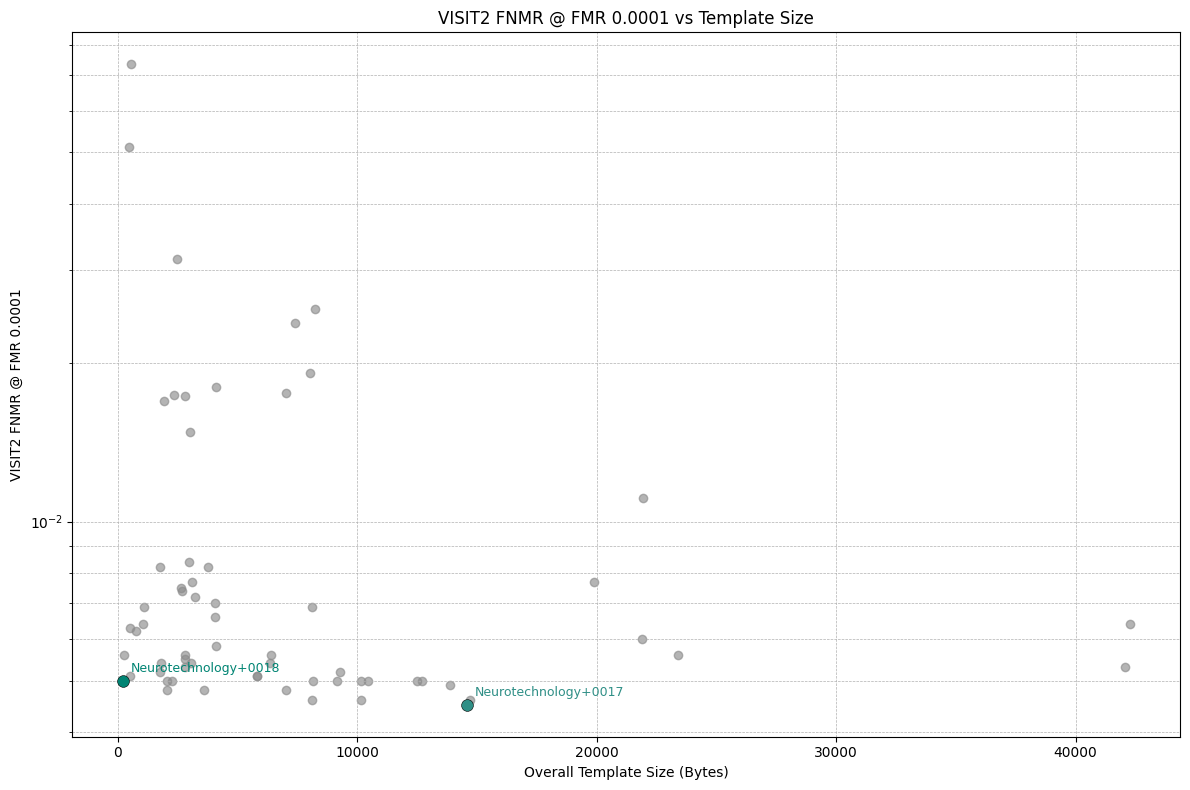
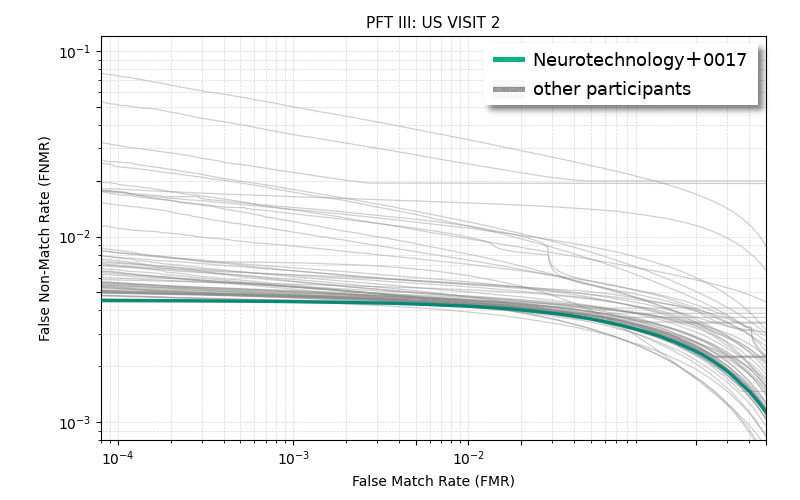
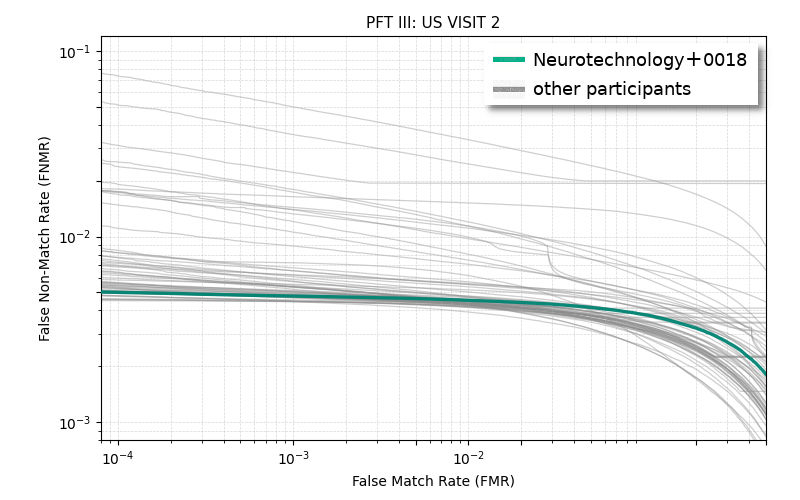
We present four charts per dataset, which show results for all participants:
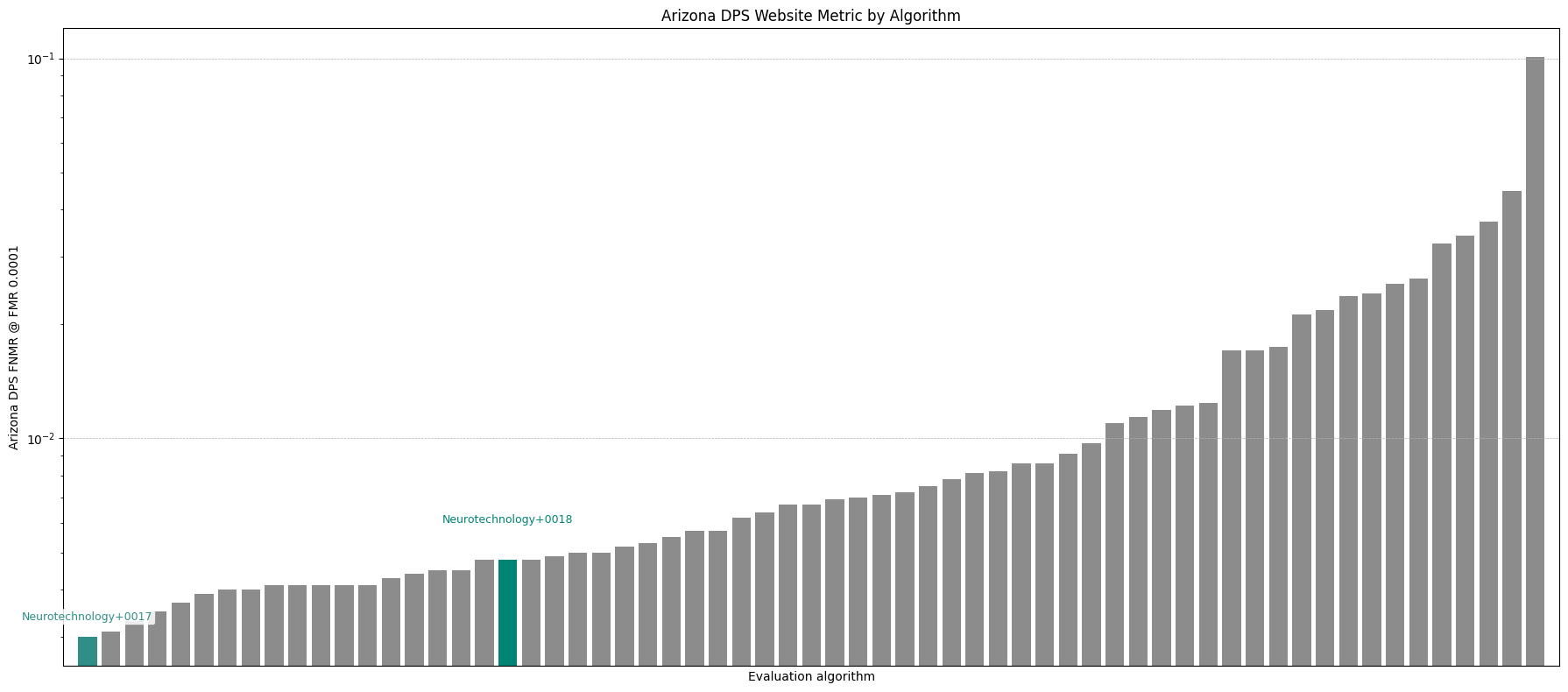
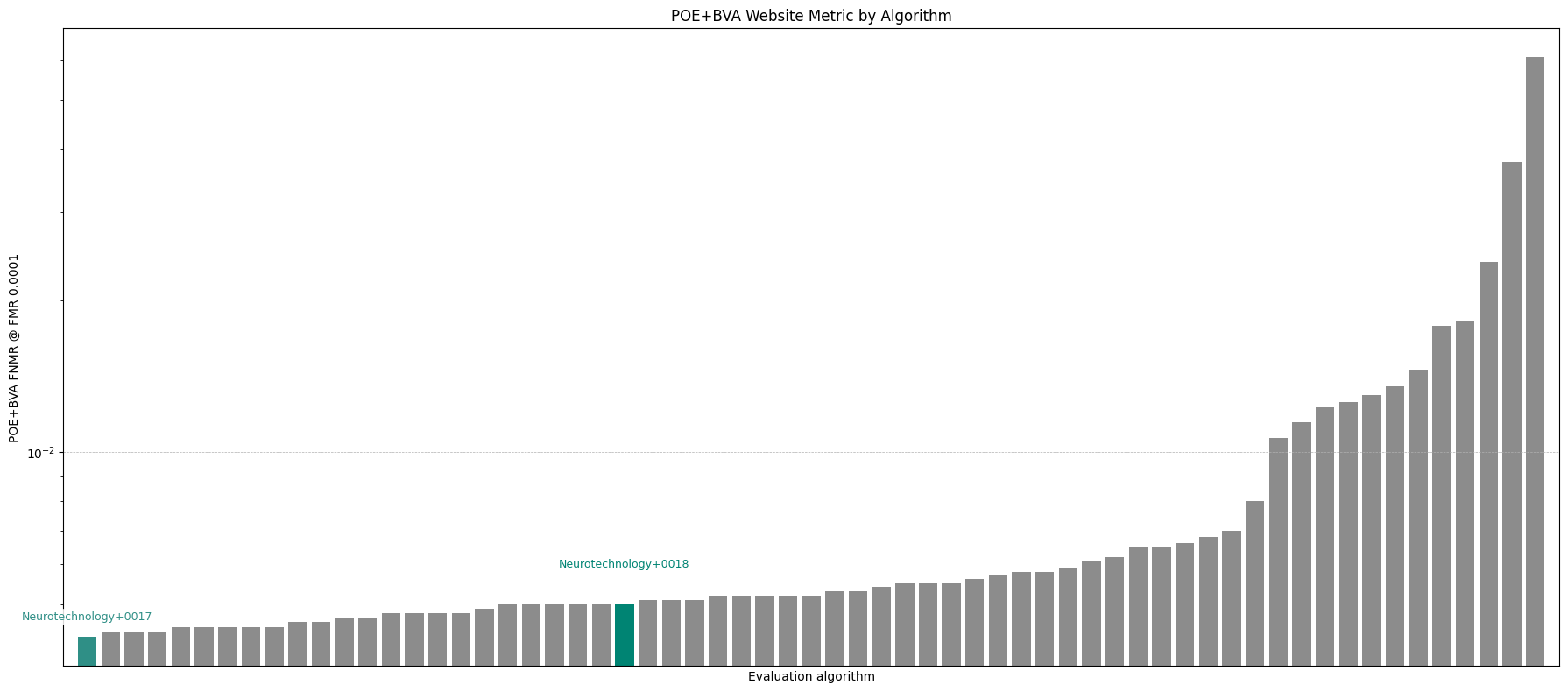
- FNMR at fixed FMR compares recognition accuracy
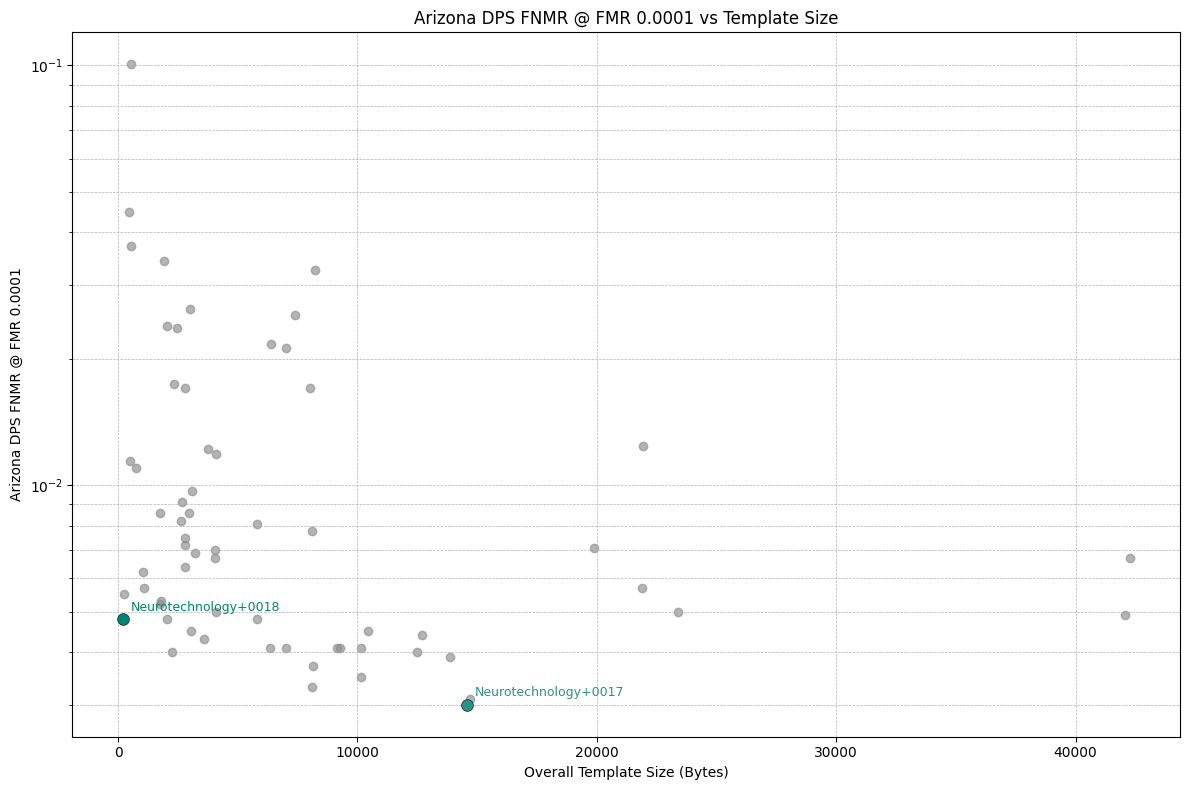
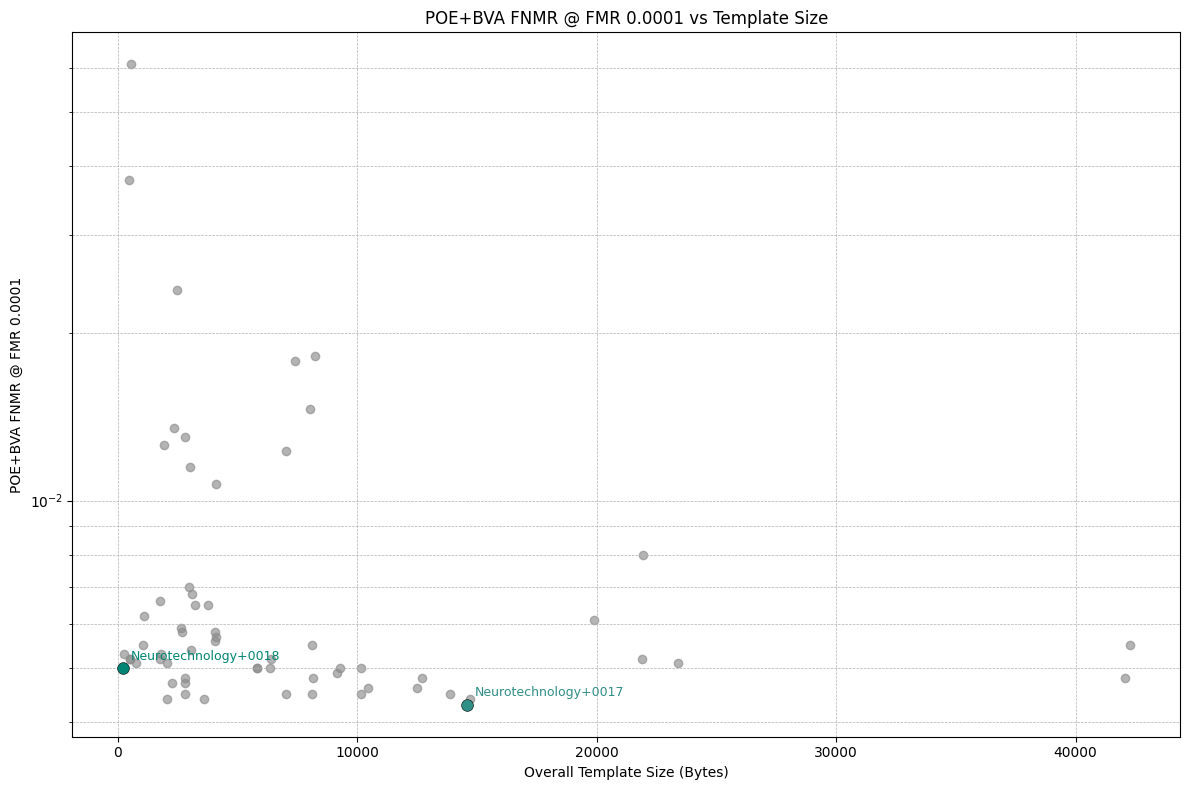
- FNMR vs. template size shows the accuracy–size trade-off.
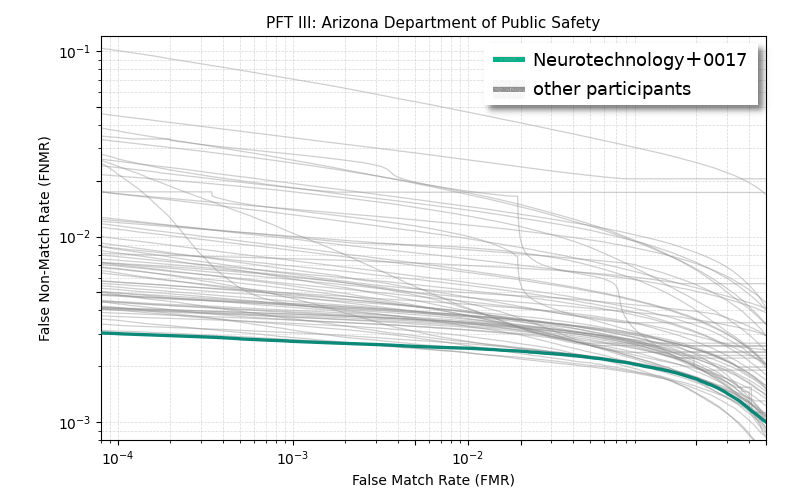
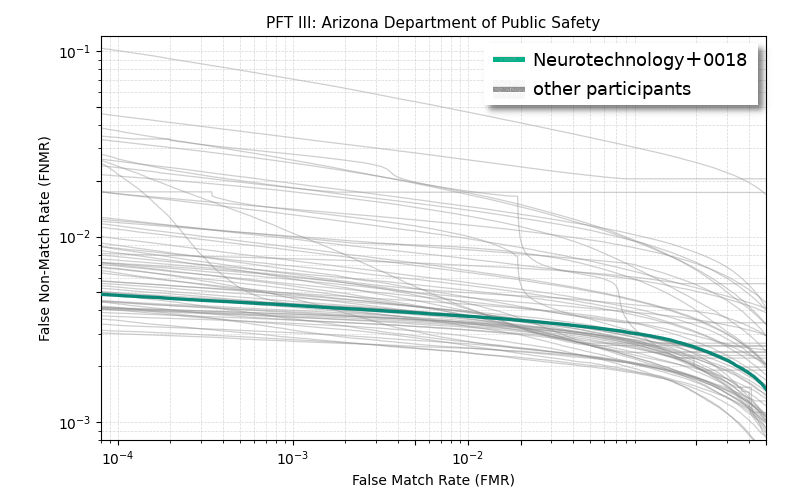
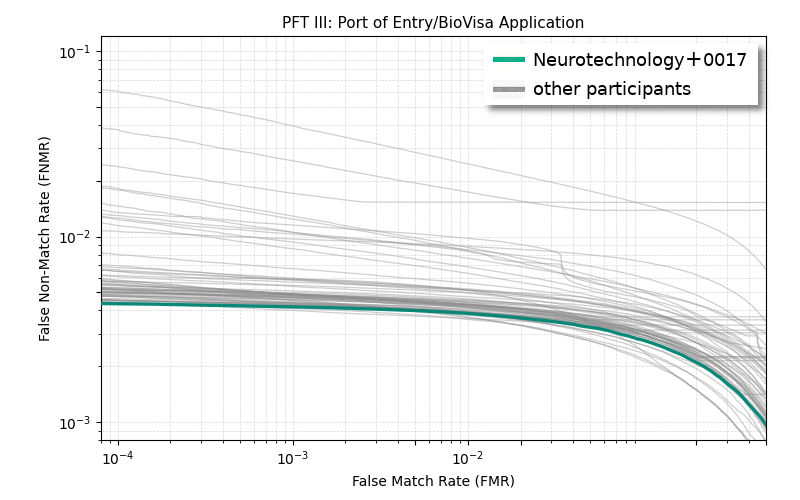
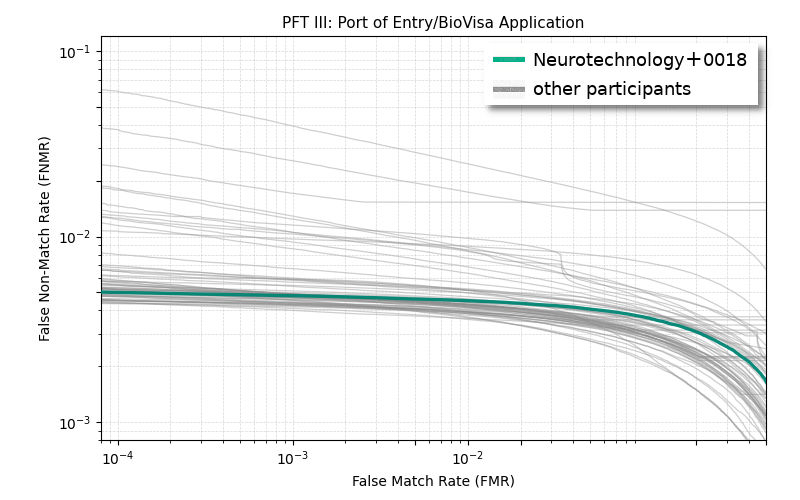
- The last two charts show the position of each of our two most recent submissions.
The presented charts are based on NIST PFT III results from April 15, 2026.
Arizona Department of Public Safety (AZDPS)
On the AZDPS dataset, Neurotechnology+0017 achieves the highest recognition accuracy. Neurotechnology+0018 achieves the highest matching speed with a smaller template size.
Los Angeles County Sheriff's Department (LASD)
On the LASD dataset, Neurotechnology+0017 achieves the highest recognition accuracy. Neurotechnology+0018 achieves the highest matching speed with a smaller template size.
Port of Entry / BioVisa Application (POE+BVA)
On the POE+BVA dataset, Neurotechnology+0017 achieves the highest recognition accuracy. Neurotechnology+0018 achieves the highest matching speed with a smaller template size.
US VISIT #2 (VISIT2)
On the VISIT2 dataset, Neurotechnology+0017 achieves the highest recognition accuracy. Neurotechnology+0018 achieves the highest matching speed with a smaller template size.
History notes
Neurotechnology is participating in the PFT II evaluation from the very beginning in 2019.
In 2022 Neurotechnology has achieved the first place with the most accurate fingerprint recognition algorithm. Ongoing algorithm refinement has validated its position as the top vendor.
Neurotechnology had also participated in the previous PFT II, which ended in 2019.


