



Neurotechnology contributed to the development of artificial intelligence technologies capable of automatically detecting misinformation in Lithuanian-language content. The project resulted in an openly available misinformation dataset and two AI models designed to support future fact-checking, media monitoring and content analysis solutions.
- Validated dataset Lithuanian misinformation articles and social media posts
- Three content categories misinformation, manipulative content and factual information
- Automatic classification of Lithuanian-language content
- Open-access resources available for future AI development
The spread of misinformation presents growing challenges for media organizations, public institutions and businesses alike. Detecting false or manipulative information manually is both time-consuming and difficult to scale, creating a need for reliable AI tools capable of analyzing large volumes of Lithuanian-language content.
To improve the automated detection of misinformation in Lithuanian-language content, a consortium of Lithuanian organizations developed a comprehensive misinformation dataset and two artificial intelligence models for automated content classification. Within the project, Neurotechnology was responsible for validating the collected data and training the AI models used to identify misinformation and manipulative content.
Training AI Models for Content Classification
Neurotechnology developed and optimized two complementary artificial intelligence models designed to classify Lithuanian-language content.
The first model is based on a BERT architecture optimized for text classification. It analyzes the linguistic context of news articles and social media posts, classifying content as factual, manipulative or misinformation.
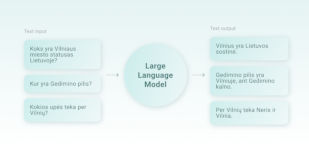
The second model is based on a Large Language Model (LLM) architecture, enabling deeper contextual understanding and more advanced reasoning when analyzing textual content. Together, the two models provide flexible AI solutions suitable for different misinformation detection scenarios and deployment requirements.
Throughout development, Neurotechnology optimized the training process and evaluated model performance to achieve reliable classification results for Lithuanian-language content.

Practical Applications of the Project
The technologies developed during the project can support a wide range of real-world applications where reliable information analysis is important.
By combining a validated dataset with modern AI models, the project provides a strong technological foundation for future misinformation detection systems and other document classification applications.
Related Case Studies

AI-powered image-to-text descriptions that make visual content in digital publications accessible for people with reading difficulties.
Two vectorized Lithuanian language models trained and optimized on a 3.5-billion-word licensed corpus.
William, an AI-powered sales assistant and digital team member automating internal sales and customer communication.
AI-powered semantic search across 5+ million legal documents for Infolex, Lithuania's largest legal information system.
help you create and deploy the NLP-based solutions.


